
Imagine being 19 years old. You are still in high school, your future lies in front of you with all the confusion and noise of your teenage years. Google comes knocking at your door: they want to hire you for an internship, your first paycheck would say something like 7000€/month. What would you say? Would you accept?
Well, Daniela Brozzoni said no. Of course she did, otherwise we would not be here telling her Bitcoin story, right?
She was contacted directly from the recruiting department of Big G. It was April, and she hadn’t finished her last year of high school yet.
At the time I was very involved in computer science and algorithm competitions, and a lot of the people around me were following a pretty standard path where Google was basically the dream. You leave your small town in Italy, move to some exciting big city, work in one of those beautiful offices you see online, and you've made it.
She remembers doing a couple of rounds of interviews with Google’s emissaries. After the initial excitement wore off, she started to think that something might be off, wondering why they had contacted her instead of other peers, who, as she recalls, used to obtain better results but had never heard from Google.
Google was talking a lot about diversity in hiring at the time, and I couldn't really get that thought out of my head. I didn't want to be hired because I made some percentage look better. I wanted someone to care about my brain, my work, and what I could actually contribute.
That was not the only thought in Daniela’s mind, though. At the same time, due to her initial fall in the Bitcoin rabbit hole, she was starting to care deeply about the concept of privacy and the whole philosophy behind it. As everyone knows at this point, Big G is not exactly what we may call a privacy-oriented company. She was starting to understand how much data companies collect, what they know about people, how little control users have over that information, and all the power that follows.
I've liked computers for as long as I can remember. I think I got my first one when I was five or six, maybe even earlier. Obviously at that age I was mostly playing games and using the internet, but I also remember messing around with a bit of HTML.
Daniela’s love for technology – and computers specifically – came at a very young age. Her first, real encounter with computer science happened when she was 13 years old, when her father came home with an Arduino board. He needed help – he wasn’t a coder and the documentation was in English – and Daniela was the right person to do so.
I remember coding little things with him and finding it so fun. It felt almost like talking to a machine. If I press this button, you turn on this LED. I could decide what I wanted the computer to do and then figure out how to make it happen.
She loved that work so much that she decided to study computer science in high school. “My background is actually pretty straightforward. I liked computers as a kid, discovered programming, and kept going,” she says.
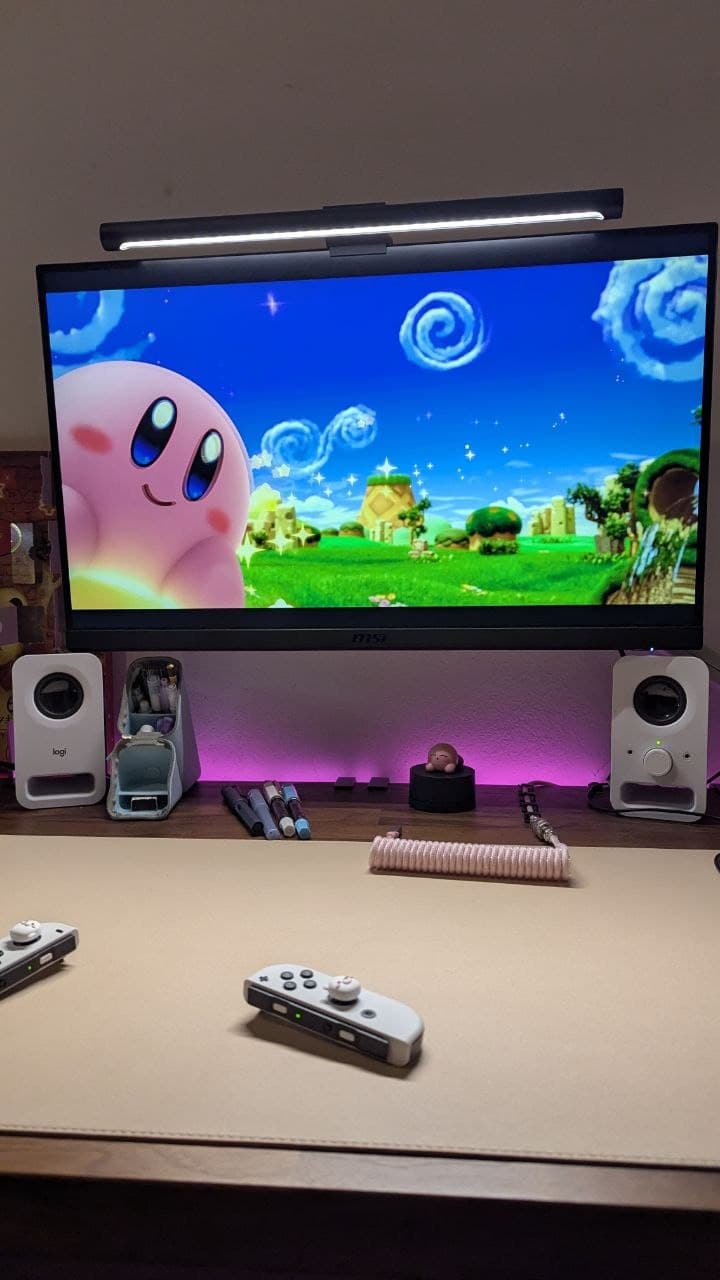
She isn’t only into computers, though. Daniela is an avid reader, and she doesn't care too much to be consistent on what she reads: “I like having both the ‘I am learning something’ books and the ‘I am just having fun’ books going at the same time.” She also loves videogames, which she sees as one of the things that helps her unwind after stressful days at work.
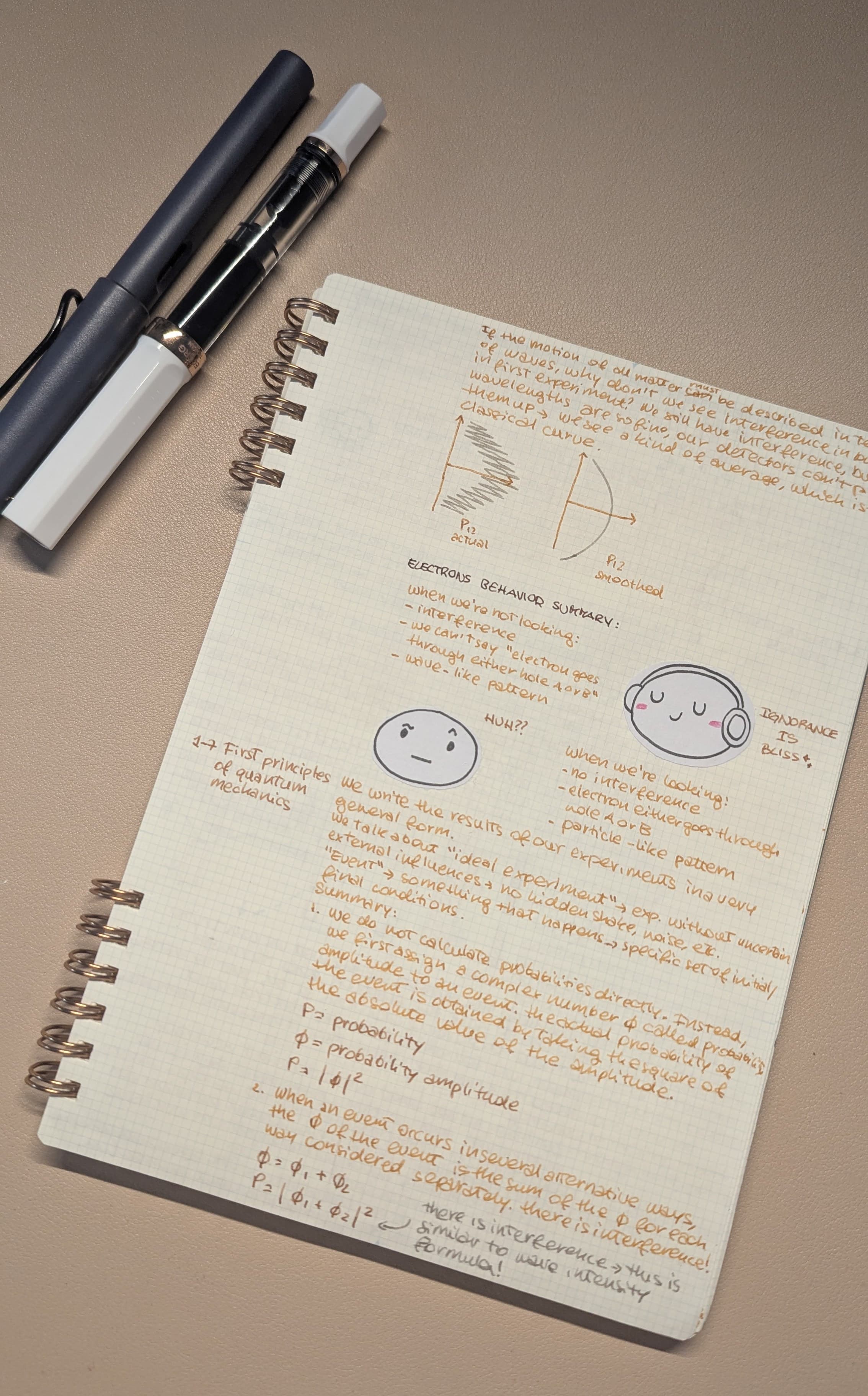
Although she made computers the center of her life – or precisely for that reason – Daniela loves to hand write as much as she can. “I take many handwritten notes, both for work and whenever I'm learning something new. I like drawing diagrams and using different pens and inks, which makes learning new stuff even more fun,” she says.
I first got interested in Bitcoin because of maths and cryptography.
It was during the third year of high school that Daniela first heard about Bitcoin. Most people enter the space because at first they are convinced that they could become rich in the blink of an eye. Daniela, on the other hand, was attracted by its mathematical and cryptographic properties.
A friend explained her how Bitcoin uses Elliptic Curve Cryptography for key generation and that hook got her in the rabbit hole. “The first book I read was Mastering Bitcoin, and once I started understanding how all the pieces fit together, I basically found the entire thing interesting.”
The more she dove into Bitcoin, the more she felt pulled towards it. She started to understand that Bitcoin wasn’t just a technological marvel, but that to really grok it you’d need to dive into multiple disciplines – economics, philosophy, sociology.
In particular, she was fascinated by game theory and incentives. She recalls discovering Bitcoin during the Blocksize Wars. She wasn’t that deep in the technical arguments at the time, but she “was fascinated by the way people talked about incentives. What will this actor do? What can they do? What happens if people disagree? How does the system stay robust when nobody is really in charge?”
Her interest in open-source came as a direct consequence of her fall into the Bitcoin and privacy rabbit holes.
The idea that the code was public and anyone could inspect it was really appealing to me. If you use a closed-source application that's collecting very personal information, you don't really know what it's doing with that data, who it's sharing it with, or how the software is making decisions. With open source, at least you have the possibility of looking.
That was the point where I realized, oh, this can actually be a job. I could do this too.
In Italy, there is a mandatory program for high school students called “alternanza scuola-lavoro” (school-work alternation), where students get internships at companies to start getting their feet wet in a real work environment. Daniela got an internship at a very particular company – which isn’t active anymore – called BHB Network. Founded by the current president of Plan B Network, Giacomo Zucco, BHB Network focused on bringing together the best minds in the Bitcoin industry.
I met this group of people working together on something they genuinely cared about. It felt much more collaborative and alive, and honestly just more fun. I think that influenced what I wanted from my career quite a lot.
During that brief experience, Daniela started attending her first meetups and met several people who were actually working on the protocol, and that made everything concrete. Most importantly, she realized that working in Bitcoin could be feasible, not just as a hobby or a side project, but as an actual profession.
I had found a community of people who were extremely passionate about what they were building, and I wanted to work on something that mattered to me, around people who felt the same way.
Obviously Google is pretty far from where I was starting to land philosophically, so that also made the idea of working there feel less and less natural.
At about the same time she was interviewing with Google, the same friend that introduced her to Bitcoin – together with the people she met at BHB Network – found Daniela an interview at Blockstream. She got the job.
Confronted with the choice – a fancy and highly paid job at BigG, or an opportunity at a company that deeply resonated with her views – Daniela’s decision became clearer.
Once I had those two paths in front of me, the decision became much easier. On one side was Google, the big name, the fancy offices, all of that. On the other side I could work on Bitcoin, which I found both technically fascinating and genuinely important.
At the time, she had also started university. However, she became so involved in the job she was doing on Bitcoin that she never attended a single class and soon decided to drop out to continue on the path of Free and Open-source Software (FOSS).
Daniela has been an OpenSats grantee since January 2025. She was funded to work on Bitcoin Core, the reference implementation of a Bitcoin node. Between her internship at Blockstream and her current endeavor, Daniela worked on several projects, both in the open-source space at several Bitcoin companies.
She started working on a Blockstream wallet called Green, then moved to Braiins to work on mining firmware. She then joined a startup called Revault, which focuses on providing wallet solutions to companies and organizations.
While working at Revault, she started contributing to the Bitcoin Dev Kit (BDK). BDK is a library that abstracts all the complexities of managing a Bitcoin wallet, providing a ready-to-use solution to build upon.
That’s when she received her first grant from Spiral. She became a stable maintainer of BDK, working on several features like hardware signers integration and coin selection.
I'd already been contributing for a while, and I basically reached out and asked if they would fund me to work on it full-time. They said yes, and suddenly I could spend all my time working on open source. That was really cool.
There was something that Daniela wanted to do, though. She wanted to become a contributor to Bitcoin Core. Once her Spiral grant came to an end, she started working full-time on Core. She decided not to apply for funding immediately, though, so she went on for some time using only her savings.
When you first start working on Core, you can put in a huge amount of effort without having much visible output. So much of your time is spent reading, learning, reviewing, and trying to understand how everything works. I wanted to give myself some time to do that before applying for a grant.
When her financial situation changed unexpectedly, as it usually happens, she had two choices: “apply for funding earlier than I'd planned, or start looking for another job.” The latter choice was not appealing to her, so she decided to apply for an OpenSats grant.
I remember being very honest in my OpenSats application. I told them that I was still new to Core, that I didn't have a huge amount of visible output yet, and that I needed a small grant to support me through this time, because I couldn't keep living off my savings forever.
She got the grant. “The grant basically meant I didn't have to stop. I could keep spending my time learning, reviewing, and working on Core instead of looking for another job.” She was going to do exactly what she wanted.
But I think technology is what brought me to Bitcoin, while the community is probably what made me stay.
Working remotely from your own desk is a solitary endeavor. Most of your interactions are made through a screen and sometimes you do not even know the face of the person you are talking to. Thus, it’s important to remember that you are working on something bigger than yourself and that you are part of a strong and passionate community.
Daniela knows this and makes sure to plan some time to spend amongst Bitcoiners. “I try to be intentional about going to conferences, planning trips, or just showing up at local meetups whenever I can,” she says.
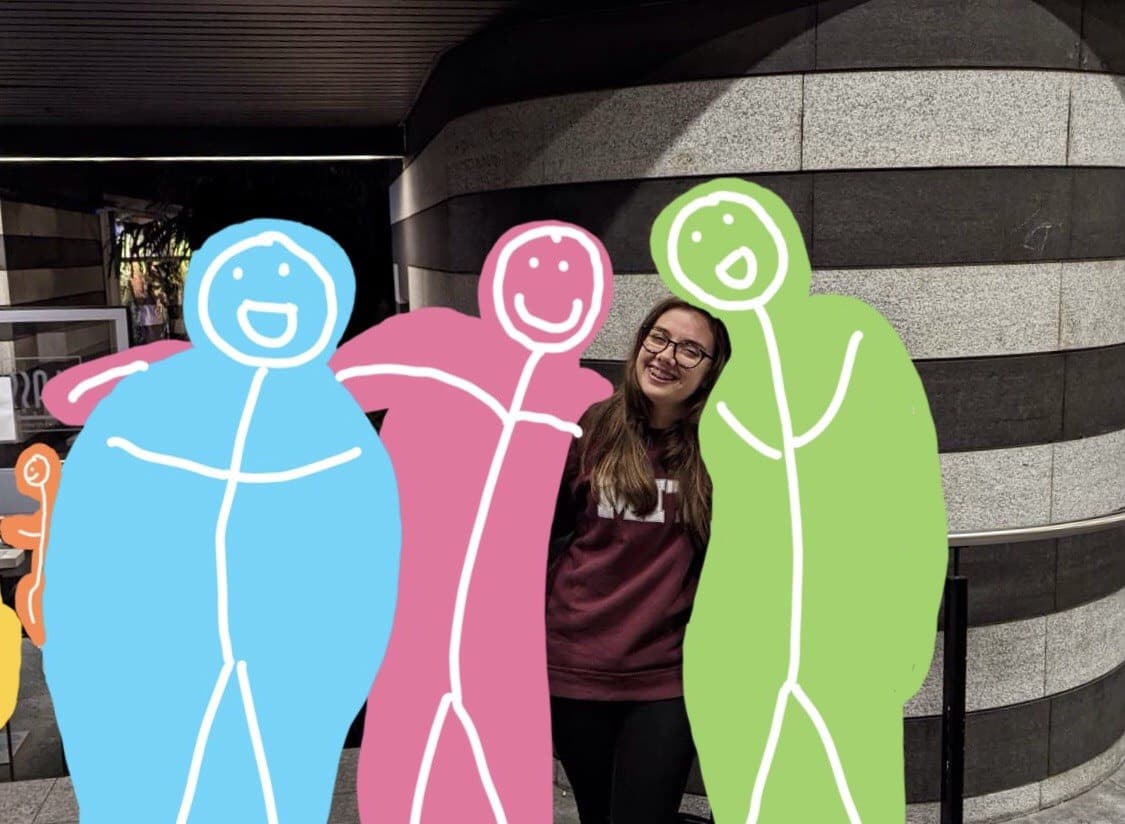
So, when she is discouraged, she tries to find new energy by spending time with Bitcoiners, the people that she knows share the same vision: “Just being around people who care about the ecosystem reminds me why I'm doing the work in the first place.”
What surprised me was that almost everyone also made a point of telling me about the personal impact I'd had on them or on the project.
Some of Daniela’s proudest moments dealt with techy stuff. The first grant with Spiral, the grant from OpenSats to work on Core, and even finding small and subtle bugs in BDK.
However, the one she loves the most has nothing to do with code. It happened when she told people she was leaving BDK to work on Core. “Until then, I'd mostly measured my contribution in code. Things I had built, bugs I'd fixed, reviews I'd done,” she recalls.
Her peers, though, did not care about that too much. They cared more about letting her know the impact that she had on them personally.
That was probably the first time I really understood that being a good person to work with is also a contribution. You can make someone's work easier, help them when they're stuck, or just make a project a nicer place to spend time.
I think there are some scary times ahead, but hopefully we'll come out of this stronger. The odds are a bit stacked in favor of attackers: they can find a vulnerability and exploit it, while defenders need to find it, triage it, fix it, coordinate a release, and get that fix to users without tipping off the attackers.
At the time of writing, Daniela is also busy helping the Red Team. “I mostly do outreach for the Red Team: once the clankers have found something, I make sure it gets to the right teams,” she says. It is certainly a stressful job. Disclosing vulnerabilities and making sure that the information reaches the right people is not something to take lightly.
Daniela thinks that Bitcoin is just an early preview of what will hit the rest of the world’s infrastructure. She thinks that “the incentive to attack it is very direct: if you successfully attack Bitcoin infrastructure, there can be money at the end of it immediately.” She is hopeful for the future, though, and there are many lessons to be learned.
I really enjoy helping other people move their work forward, so I spend a lot of time reviewing. I read people's code, think through the changes they're proposing, give feedback, and try to help good work get over the finish line.
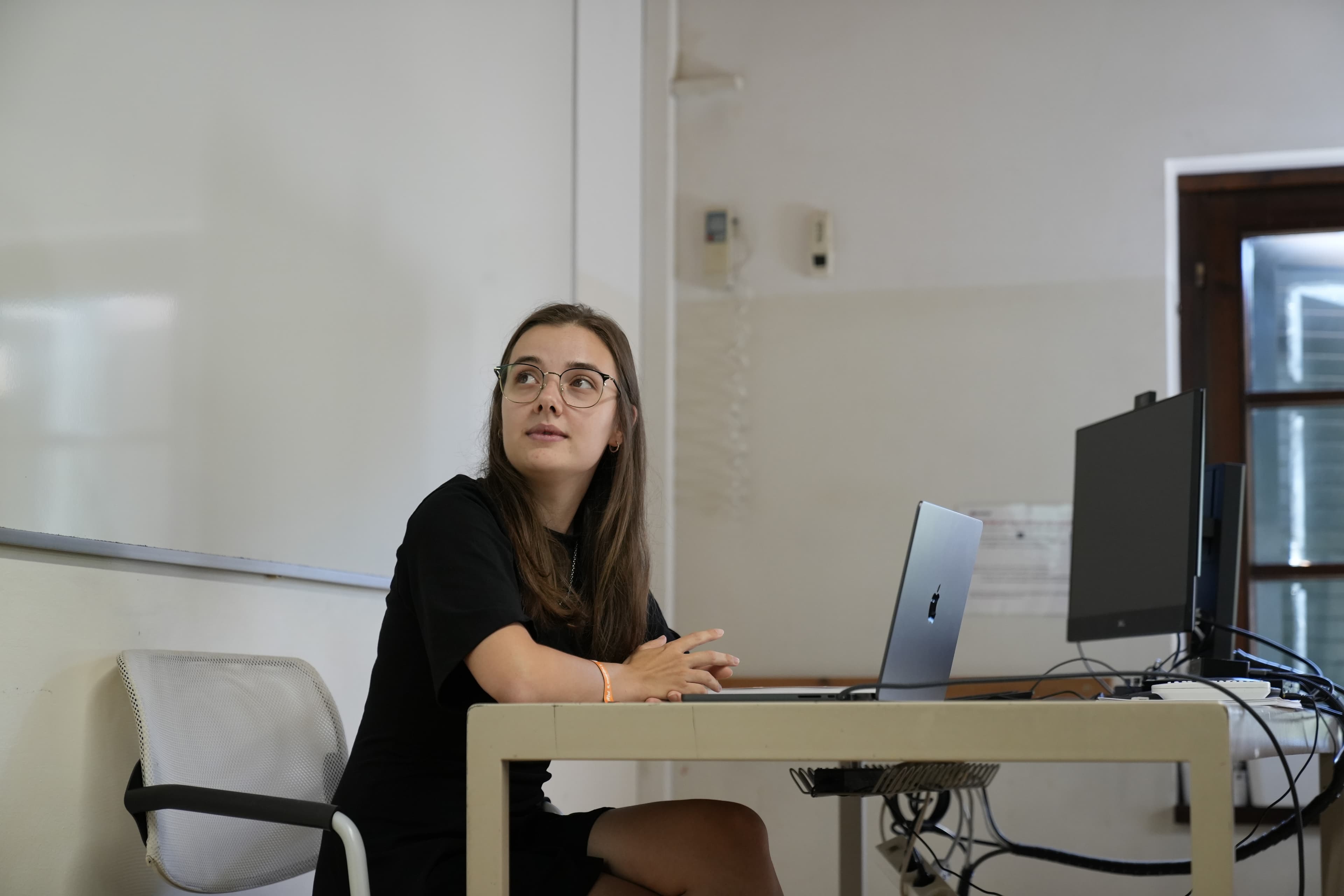
Daniela is now a full-time Bitcoin Core contributor, and she is happy about where this path is leading her. She is getting more comfortable with the codebase, and she is now focusing on reviewing other people’s code.
She is also busy with her own research projects, focused on making the peer-to-peer side of Bitcoin more private. A node can open connections on different networks – for example, Tor and clearnet – but even if some of those running under Tor are private, the ones running on normal traffic can be linked to those private ones. Daniela’s effort is focused on making those links more difficult.
I still feel very early in my journey, so I don't really have some grand vision of exactly what I'll be doing five or ten years from now. I genuinely don't know, and I'm fine with that.
She doesn’t have big plans for the future yet. She just knows that she wants to continue walking the Bitcoin and open-source paths.
I know that I love working on Bitcoin, I love learning, and I like working with people and helping them do good work. So for now I mostly want to keep doing those things, get better at them, and see where that takes me.
Daniela Brozzoni has been an OpenSats grantee since January 2025. "The grant basically meant I didn't have to stop. I could keep spending my time learning, reviewing, and working on Core instead of looking for another job.", she says. Our support for Daniela’s work was made possible thanks to your generous donations to The General Fund.
For comments, corrections, or suggestions about our Spotlight series, please reach out to spotlight@opensats.org.